
Every few months, another headline declares the death of the point-of-sale system. Tech bloggers call it a relic. Disruptor startups pitch themselves as “post-POS.” Even some frustrated operators, tired of dealing with outdated systems, wonder aloud if it’s time to ditch the till altogether.
Here’s the reality: the POS isn’t dead. It’s evolved.
I’ve spent my career building technology for restaurants, and I can tell you firsthand — the POS has quietly transformed from a clunky terminal into the central nervous system of your business. Today, it’s not just a box on the counter; it’s the platform that connects every channel, every order, and every part of your operation.
Stick with me, and I’ll explain why the “POS is dead” narrative is misleading — and more importantly, what’s really at stake. We’ll look at how the restaurant POS has shifted from till to omnichannel hub, why fragmented systems create far more pain than the POS itself, and how cloud and AI are shaping the future of restaurant tech.
Why the “POS Is Dead” myth exists
So why do so many people believe the POS is obsolete? It comes down to three shifts.
First, customer behaviour has changed
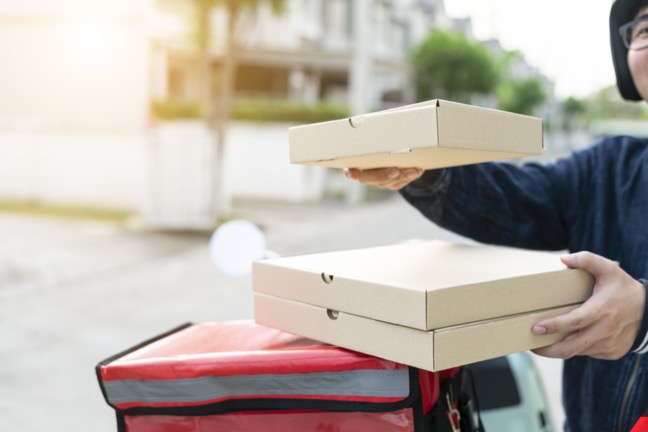
Orders now come from everywhere — apps, kiosks, delivery marketplaces, drive-thru boards. For operators, that explosion of channels makes the old counter-based POS feel irrelevant.
Second, legacy systems haven’t kept up
Many restaurants still struggle with bulky, siloed tills that don’t integrate well with online ordering or back-office tools. When a system can’t keep pace with modern operations, it’s easy to blame “the POS” as a category.
Third, new vendors benefit from the narrative
Software companies selling online ordering, loyalty, or delivery tools position themselves as replacements for the POS. It’s a convenient way to make their products sound indispensable — even if what they’re really doing is adding yet another disconnected piece to the puzzle.
The truth is, what’s dead is not the POS itself but the single-purpose, isolated till of the past. The modern POS is a distributed, cloud-connected platform that ties all those new channels together. The problem operators face today isn’t too much reliance on POS — it’s too little unification across their tech stacks.
The real enemy is fragmented tech, not the POS system
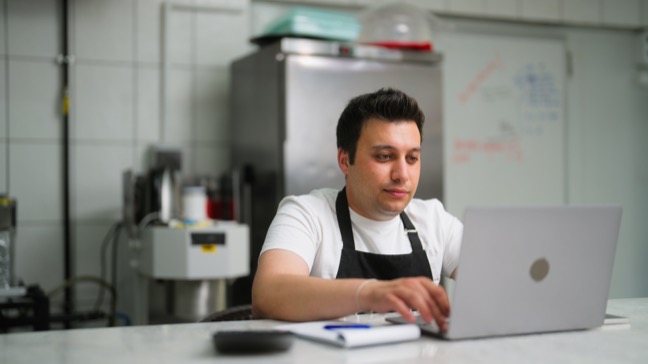
If restaurant operators are feeling pain, it’s usually not because of the POS — it’s because of the patchwork of systems around it. Over the years, restaurants bolted on online ordering tools, delivery tablets, loyalty apps, and scheduling software. The result? A Frankenstein stack with too many logins and not enough integration.
I’ve seen operators waste precious minutes re-entering orders from one system into another, or trying to reconcile five different reports just to understand their daily sales. That kind of fragmentation drains staff time, creates errors, and makes cost control nearly impossible.
A modern restaurant POS solves this by acting as the unifier. Instead of juggling a half-dozen disconnected platforms, operators need a system that manages every channel, updates menus in one place, and provides a single source of truth for reporting. In other words, the POS isn’t the problem — the lack of a unified POS is.
Restaurants thrive when their tech stack is cohesive. The fastest way to kill productivity (and margins) is to let Frankenstein live.
How the Cloud and AI are making smarter restaurants
The most exciting shift is what happens when POS moves fully into the cloud and starts leveraging AI. We’re no longer talking about just processing transactions. We’re talking about predicting demand, optimising staffing, and streamlining the kitchen.
A cloud-first POS has access to every transaction across locations and can crunch data to forecast what’s likely to happen next. Imagine knowing you’ll need 20% more prep for a Friday night rush — before it even starts. Or being able to automatically trigger a quick-turn promo when mid-afternoon sales dip.
AI is also making its way into the kitchen. Vision systems can flag bottlenecks. Voice AI can take drive-thru orders and feed them straight into the line. Together, these tools mean you can do more with fewer staff — a critical edge when staffing is tight.
This is the opposite of “dead.” It’s the POS as an active partner in running the business, not just a silent till.

Cloud first, edge second
There’s plenty of buzz about edge computing — running parts of your system on local devices instead of the cloud. In practice, most restaurants don’t need an extra on-site server. It’s just more hardware to buy, maintain, and eventually replace.
That doesn’t mean edge is useless. Certain AI features — like vision systems that monitor prep lines in real time or voice assistants that take drive-thru orders instantly — can benefit from local processing. But the real intelligence happens in the cloud, where unlimited computing power can analyse trends across every channel and location.
The future of restaurant POS systems will lean heavily on centralised intelligence with minimal on-site complexity. Tablets, kiosks, printers, maybe a lightweight offline cache — but no bulky servers humming away in the back. That’s how operators get the best of both worlds: real-time insights and simple, scalable infrastructure.
Five practical steps for restaurant operators to modernise their tech stack
If you’re rethinking your restaurant tech stack, here are five steps I recommend:
- Audit your current systems. List everything from POS to delivery tablets to payroll integrations. Identify where you duplicate work or rekey data — those are the biggest opportunities for consolidation.
- Look for unification, not just features. Choose a platform that ties front-of-house and back-of-house together. If you have to update a menu item in three different places, that’s not unification.
- Go cloud-first. Make sure your POS is built for the cloud, with reliable offline capabilities for outages. Cloud platforms are easier to update, scale, and connect to other tools.
- Simplify for staff. Opt for a system that’s intuitive and easy to learn. Training new team members should take hours, not days. The faster they’re up to speed, the faster you see ROI.
- Use your data. Don’t just collect reports — act on them. Start small: monitor staffing costs daily, track your top-selling items, or test one targeted promotion. The point is to let data guide decisions, not just sit in dashboards.
Why the POS is still integral to restaurant operations
The “POS is dead” narrative makes for a catchy headline, but it misses the truth. What’s really dead is the clunky, siloed till of the past. In its place, the POS has become a cloud-powered, AI-enabled platform that ties every order, every channel, and every guest interaction into one system.
The restaurants that win in this new era won’t be the ones chasing the next shiny app. They’ll be the ones who unify their tech around a smart restaurant POS platform that works as hard for the business as their teams do.
Or as I like to say: “The old POS is gone — long live the platform that runs your restaurant.”