How to build digital ecosystems that drive revenue and deepen connection
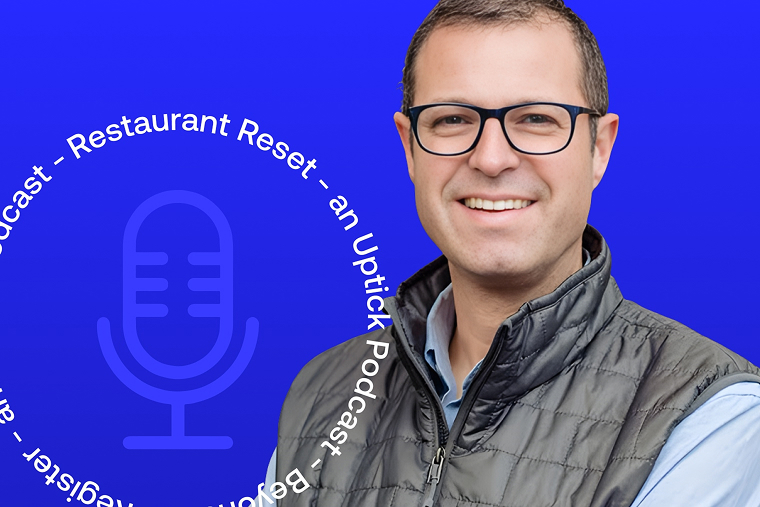
When you open your favourite restaurant’s app to order ahead, collect points, or skip the queue, you’re using a system that Adam Brotman helped invent.
As former Chief Digital Officer at Starbucks, Adam built one of the most powerful digital ecosystems in restaurant history: the Starbucks app, Rewards program and Mobile Order & Pay system that changed how every brand thinks about loyalty.
Today, almost every restaurant with a rewards app is playing from a playbook he helped write.
When I asked Adam in a recent episode of Restaurant Reset just when he realised Starbucks Rewards was more than just a loyalty program, he pointed to one number: 8 million active users.
That was the tipping point. Suddenly, loyalty became a revenue engine. But what stood out most in our conversation wasn’t the tech, but rather the mindset.
Build for the customer first
Adam’s first principle was deceptively simple: build what’s best for the customer.
That might sound obvious, but in 2009, few enterprise brands were thinking that way. Starbucks was still mailing physical postcards and gold cards with customers’ names embossed on them.
“We wanted every interaction to make customers feel more emotionally connected to the brand… not just transacting, but belonging,” said Adam.
He and his team acted like customers first and executives second. They were “customer zero,” designing for themselves: the same way great musicians write songs they’d actually want to listen to.
It worked.
Innovation without alignment is just noise
But there was another secret to their success: alignment.
At a massive company like Starbucks, innovation doesn’t happen by dropping new tech on top of old systems. Adam earned credibility the slow way: by showing up every morning at 7 a.m. to sit with operations leaders, listen to baristas and learn how the business really ran. Only after proving he understood store-level realities could he connect digital strategy to day-to-day workflow.
That’s what most companies get wrong. They chase “digital transformation” without building trust or understanding the operational heartbeat.
Over time, that patience paid off. Between 2009 and 2014, Starbucks rolled out free Wi-Fi, digital payments, mobile loyalty, and eventually Mobile Order & Pay, transforming how millions of people buy their morning coffee.
No shortcuts when it comes to transformation
What’s remarkable is how long it took: five years.
In a world where leadership teams want everything in six months, Adam’s team built deliberately, layering innovation over infrastructure and never mistaking speed for progress.
When we talked about mobile ordering, Adam laughed about those early days. “We lit it up in Portland first,” he said. “There was a moment where I thought, God, I hope I don’t break Portland.”
They didn’t, and the rest of the industry followed.
He also made a point that still resonates: great innovation is always customer-first, not tech-first.
Starbucks didn’t start with, “How do we use mobile ordering?” They started with, “How does a customer actually think about getting their coffee?”
That lens turned Starbucks’ app into one of the most profitable digital ecosystems in hospitality, long before most companies were even talking about omnichannel.
But the lessons didn’t stop at loyalty. Adam’s career since then (from J.Crew to Brightloom to Forum3) has kept him at the edge of emerging technology. Today, he’s helping brands navigate AI, Web3 and the next evolution of digital engagement.
AI isn’t a buzzword. It’s your next strategy officer
His advice for restaurant leaders on AI was refreshingly pragmatic:
Stop treating it like a buzzword. Stop thinking it’s only for writing copy or summarising transcripts. And start treating it like your most powerful strategy officer.
Feed it your sales data, your loyalty data, your marketing calendar. Ask it questions you’d normally pay consultants six figures to answer. The technology is finally capable. But what’s missing is executive imagination.
And the future?
The next era of loyalty: from points to belonging
He thinks loyalty will evolve from punch cards and points to community. Programs will become more personalised, gamified and experiential: more about belonging than discounts. He points to Starbucks’ “gold card era” as proof that even adults respond to game mechanics when designed well.
As for the fear that AI and automation will replace humans, Adam’s take was clear: the best brands will use technology to amplify the human touch, not erase it.
When he compared the trajectory of AI to self-driving cars (imperfect today, inevitable tomorrow) I realised what made his approach so timeless.
Forget chasing the shiny objects. Adam builds systems that make people’s lives easier, whether they’re customers ordering coffee or baristas making it.
That's how digital flywheels actually work — and Adam breaks down every layer in this episode. Give it a listen and let me know what you think.