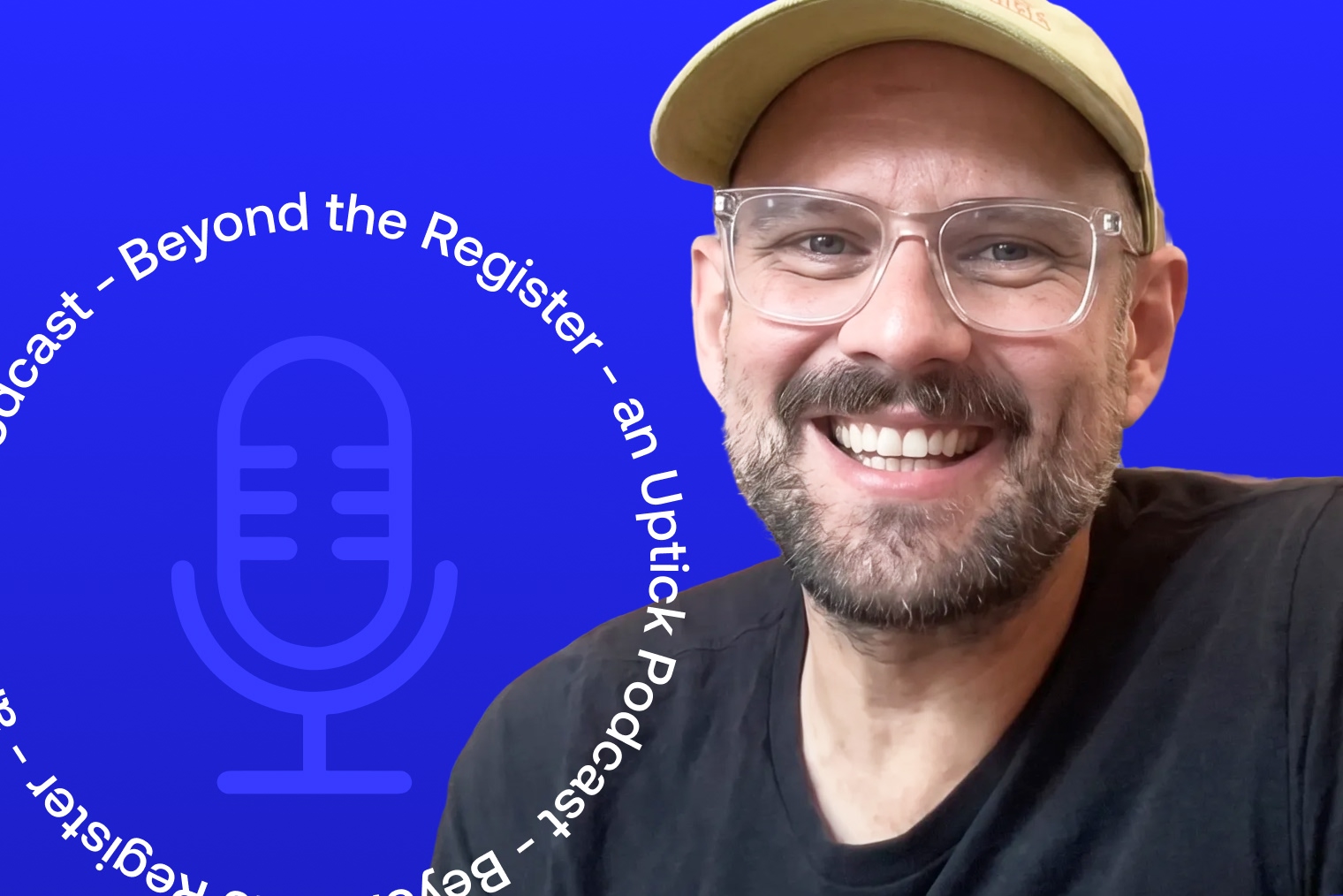
Joel Iverson graduated from UVA with an economics degree, spent five years helping a wellness brand scale from 20 to 300-plus employees and had over a hundred million dollars flowing through his direct marketing consulting work.
Then he walked away from all of it to brew beer in a garage with friends every Monday night.
Today, he's CEO of Monday Night Brewing, a $67 million business with six locations across four states. Read on to see what worked when the market shifted, when the playbook stopped making sense and when the only option was to pivot or close.
For the full story, listen to my entire conversation with Joel on this episode of Beyond the Register.
How do you know when a hobby should become a business?
Joel and his co-founders didn't wake up one day and decide to open a brewery — they homebrewed for five years. They did blind taste tests and put their beers up against well-known craft brands to see if people would choose theirs. When two or three of their beers consistently won those blind tests, that was their signal. They had the product.
But they didn't quit their jobs immediately. Joel calls it the 10% entrepreneur approach — take 10% of your time and really test the idea before you burn the bridges.
While he and his co-founders were homebrewing, they were also planning, doing market research, understanding distribution networks and figuring out how they were actually going to do this. Joel admits they probably overplanned, but starting with a bang beat starting with a whimper.
"Most people thought I was a little crazy," Joel told me. "To make the jump from sort of that corporate world and stability and consulting and building big national and even global campaigns, to be like, you know what, we want to build something that's hyper local in our neighborhood and make craft beer. It was a pretty big shift.”
His wife supported him as long as he wasn't jumping on a plane every Monday morning. Of course, that just meant he'd be showing up at the brewery at 2 am when equipment broke down instead. Different troubles, same level of commitment.
What did it take to run a brewery in the early years?
Joel described the early years as chaos. They'd built out a 20,000 square-foot facility, bought all the equipment with an SBA loan — the kind where you're signing away your house and your future — and then stood in that empty space with just four people thinking, “What the heck are we doing?"
From day one, Joel was the brain. He built the pilot brewing system himself. When something broke, he was the one showing up in the middle of the night to fix it. They had distributor orders to fill, a taproom to run and they were doing it all with a skeleton crew.
What changed things was when Jeff, one of the co-founders, left his private equity job and brought structure to the business. Joel and Jonathan, the other co-founder, had been resistant to what they saw as corporate nonsense — budgets, meeting cadences, performance reviews. But Jeff helped them see that those things weren't bureaucracy because they allowed the business to scale without collapsing under its own weight.
"I think we do really well with our people," Joel said. "We do a lot more than most craft breweries in terms of just creating a great work environment and letting people thrive and grow."
That foundation — the culture, the values, the team that could execute without Joel having to be everywhere at once — is what allowed Monday Night to survive when the market turned.
How do you pivot when your entire industry is contracting?
Here's the reality: craft beer volume sales have been down 4-5% for two years running. An inspector from the city of Atlanta told Joel that three years ago, there were 12 breweries in his district. Today, there are four. Eight closed.
Joel's response wasn't to double down on craft beer. It was to ask what they could do to be a more inclusive craft brewery. The answer? Food and non-alcoholic options. They added coffee on top of that and started making wood-fired sourdough pizzas.
During COVID-19, Joel began making them at home. He made a sourdough starter in the brewery's wild fermentation room and started bringing his portable oven to the brewery every Friday to make pizzas for the production team — who were still showing up, maintaining distance and keeping production going when the taprooms were shut down.
A few months later, a friend told him the pizzas were so good he needed to sell them at the brewery. That same friend knew about two Italian wood-fired ovens from a restaurant that had closed two months into COVID-19, so Joel bought them. Now wood-fired sourdough pizza is a core part of the business — but the true magic of it all was about listening to what people wanted.
"I want everybody to walk into our brewery and feel welcome. I want them to feel the hospitality and find products that are delicious and intentional," Joel said.
Why does treating a brewery like a restaurant matter?
Joel doesn't just run a brewery — he runs a hospitality business. He wanted to create an environment where people come back not because they need a drink, but because they want to be there.
Part of that means hosting game and puzzle nights. Events designed to get people interacting with others and building community was the primary goal. Because COVID-19 destroyed third places — spaces that aren't home and aren't work — Monday Night is trying to rebuild that lost sense of connection.
"We need places where people are welcome and comfortable and come together," Joel elaborated.
What do you do when the market shifts and it’s not just a bad quarter?
Joel's answer is simple: you can't shy away from the work that change is going to take. Monday Night went from growing 25% a year to facing a contracting market. They had to pivot, so they added food and coffee. They diversified away from just craft beer, and all of it was hard. But Joel doesn't regret a single change.
"You take something that's really hard to get going and build the rhythms and process," he said. "When we started offering food, it was a mess. Now it's just like clockwork."
The bigger challenge was bringing his team along for the ride and helping them understand the why behind the changes. It went beyond announcing change — he had to explain what was happening in the marketplace, why they had to adapt, and how it was the right thing for the company and their guests.
As Joel put it: "Change is gravity. You can't shy away from the work that change is going to take."
How do you balance staying true to your identity while listening to your customers?
This is the tightrope every small business walks. You have to listen to your customers because if you don't, you won't have a business. If you listen too much, you risk losing your identity.
Joel's approach is to figure out a few things you can do well that people are going to enjoy. Beer is still at the heart of who Monday Night is, but they've also added food and drinks that appeal to more than craft beer lovers. You can come for coffee, or pizza or for a mocktail. In fact, you can come just to build Legos with strangers.
"Beer is still the core of who we are and why we were founded," Joel explained. "But I want everybody to walk into our brewery and feel welcome."
That balance — staying true to your identity while being willing to evolve — is what separates businesses that survive market shifts from businesses that close.
What can small business owners learn from Monday Night’s playbook?
Test before you leap.
Joel and his co-founders homebrewed for five years before they opened. They did market research, understood distribution and overplanned. You don't have to quit your job on day one — take 10% of your time and really test the idea first.
Bring complementary skills to the table.
Joel was operations, Jeff was finance and Jonathan was marketing. If you're building something, make sure your team has the skills you don't.
Don't shy away from complexity if it makes you more inclusive.
Adding food and coffee was hard, but both made Monday Night a place more people wanted to be.
Bring your team along when you pivot.
Explain why changes have to be made. Help your team see the bigger picture and then make them part of the solution.
Stay true to who you are but be willing to evolve.
Beer is still the core of Monday Night’s identity but they’ve also added things that make more people feel welcome.
Joel’s advice: Take the next right step
Joel Iverson built a $67 million business in an industry that's contracting. He did it by treating his brewery like a hospitality business, by being willing to pivot when the market shifted and by creating a space where people actually want to be regulars. He didn't have a master plan. He just did the next right step each time, listened to his customers without losing his identity and brought his team along for the ride.
For more insight from Joel, listen to our full conversation on this episode of Beyond the Register.