
The challenge behind improving online sales
We’re all aware of the recent surge in ecommerce, but what was behind it? In a word: COVID.
“The mega change was COVID, even for my parents,” Mark Hagan, senior vice president of payments products at Global Payments, said. “They went from a world of like, ‘Yeah, I've to go see it, touch it, feel it, buy it’ to ‘Yeah, you couldn't pay me to go into that store right now.’ “
Because consumers still had to buy groceries or get their grass cut, we transitioned to online payments overnight for nearly everything from hair care to lawn care. In fact, many small businesses had no choice but to sell online quickly.
Fast forward to today, and some of these ecommerce businesses are learning the hard way that just having an online presence isn’t enough: You have to be mobile friendly, eliminate friction and provide a seamless, intuitive and secure customer experience anywhere, 24/7/365.

“We see that 70% of US consumers actually use their mobile phones [when shopping online]."
According to research from the Baymard Institute, the biggest barriers for customers to buy your product online are:
- Unexpected costs like hidden fees
- Mandatory account creation
- Trust issues like outdated design or unclear security measures
- Complicated checkout processes that involve too many steps or fields to fill out
- Lack of payment methods like Apple Pay®, Google Pay® and buy now, pay later (BNPL)
The key to boosting online sales
The truth is, customers don’t always abandon their carts because they don’t want to buy — they leave them because online retailers make it too hard. Long forms, extra clicks, slow logins — every step you add to the checkout process increases the chance your customers will drop off and buy elsewhere.
3 strategies you need to grow your online sales
But a few, surprisingly simple steps can supercharge your conversion rates overnight and attract more online customers. In our recent guide, Turn Browsers into Buyers, we share three proven strategies for capturing more online sales. With decades of experience in ecommerce payments at Global Payments, we break down common checkout pitfalls and highlight the small yet powerful tweaks you can make quickly.
“In reality, these are the types of roadblocks that we've weirdly gotten used to having to deal with,” Mark says. “But with some very specific tweaks you can see around a 35% increase for most ecomm sites.”
For small retailers, that’s a big chunk of change for just a few minor adjustments. Baymard found that there’s up to $260 billion in revenue just waiting for small retailers to tap into — revenue that these experts provide a proven framework to attain.
3 ways to decrease cart abandonment
The famous $300 million button case study shows that replacing "Register” or “Log in" with "Checkout as guest" can drastically improve your conversion rates. And yet, some brands still make it hard to shop. Are you one of them?
If your conversion rates are higher than the average (70%) — or you just want to optimize your checkout — here are three ways you can turn more browsers into buyers.
1. Reduce friction with one-click checkout
Friction is anything that stands in the way of your sales at checkout. If that sounds broad, you’re right: Friction can be anything from a slow loading webpage or a long form to a site that looks wonky on a mobile device.
Online shoppers want to be able to pay faster, anytime, anywhere, so offering more options to save their preferred payment methods is always a win for your business. By using one-click checkout, you can reduce the time it takes to complete a purchase.
You’ll also minimize distractions by removing extra form fields or coupon boxes that may come preloaded. If they’re not legit, they’re likely to send your shoppers off to search for a coupon. The problem is, if they can’t find one, they probably won’t come back.
“Some people may spend 20 minutes looking for a [coupon] code,” Mark says. “And… [if] they don't find anything, they just drop the shopping cart.”
2. Offer more payment flexibility, transparency and tokenization
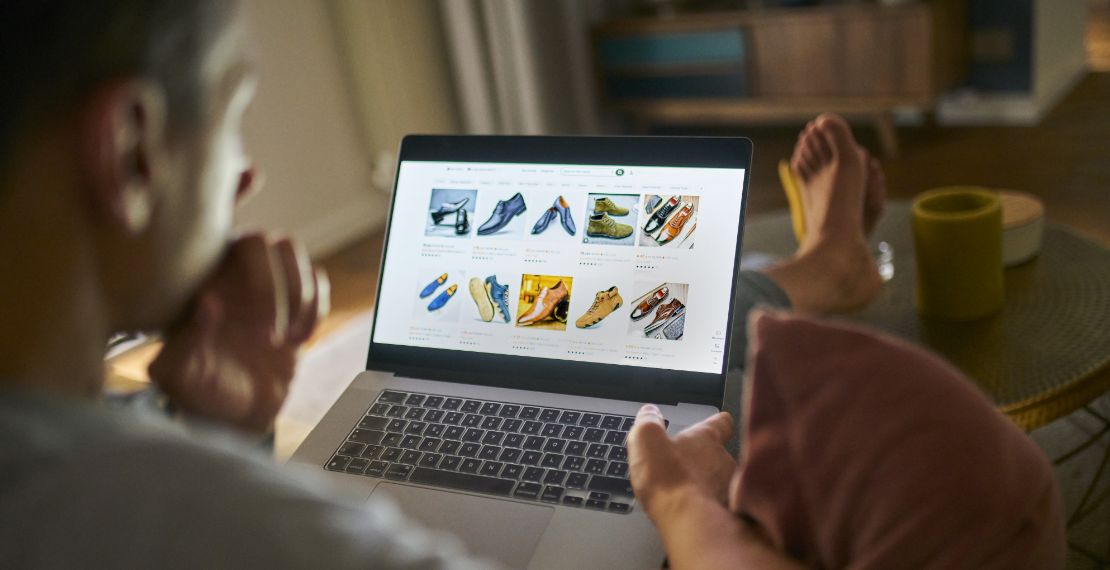
You’re probably all-too familiar with this scenario: You found the perfect pair of shoes and you’re getting ready to check out when you realize the store doesn't accept your preferred payment method or they’ve added an extra fee you didn’t see until the final click.
The availability of payment methods can make or break a shopping spree. According to a report from PYMNTS, 70% of consumers consider the availability of their preferred payment method to be very or extremely influential when choosing an online store.
Providing options to pay with digital wallets like Apple Pay, Google Pay and Shop Pay® is no longer optional — you need a broad mix of payment types in order to get more online customers. And with digital wallets, tokenization is built into the payment automatically, providing an extra layer of security and a speedy checkout. This advanced security feature allows customers to pay instantly with their biometric fingerprint or facial recognition.

“There are ways nowadays to have more than just card payments available. BNPL, Affirm and Paybrite help increase your conversions.”
BNPL is still growing in popularity, especially for millennials and Gen Z, who often choose installment payments or even BNPL cards over credit cards, particularly during the holidays or when buying higher ticket items.
“The biggest reason [shoppers drop off] by large is really unexpected costs,” Antoine adds. “If the customer doesn't see the final amount, when they click the ‘pay now’ button, most of them are just going to walk out if there’s an extra fee. I know that I would.”

3. Optimize for a seamless mobile experience
More than 63% of ecommerce comes from mobile shoppers — and the number of devices connected to the Internet of Things is on the rise, including smart appliances, vehicles and wearables.
You’ll want to be sure you’re testing your checkout process on multiple devices, including Android® and Apple®. And be sure to tap into Google Analytics or social metrics to find out where your shoppers are dropping off to make informed decisions about which devices to focus on.
Whenever you can, you’ll also want to use auto-fill features that pre-populate form fields — because, let’s face it, nobody has time — or wants — to fill them out anymore.
8 techniques you can use to increase web sales
Easily refine the overall experience with these actionable checkout optimizations.
- Enable guest checkout to remove registration barriers
- Implement one-click payment methods like Apple Pay, Google Pay or Shop Pay
- Reduce form fields to the absolute minimum required
- Clearly display total costs upfront to avoid surprise fees
- Optimize for mobile-first usability and responsive design
- Use AI and user testing to identify and fix user experience issues
- Offer BNPL options when selling higher ticket items
- Use PCI compliance and tokenization for security
Reduce cart abandonment. Rake in revenue.
A smooth, optimized checkout isn’t just nice to have — it’s a revenue driver. By reducing friction, offering flexible payment options and optimizing for mobile, you can significantly increase conversion rates.
Want to dive deeper? Download our ecommerce playbook to stay ahead of the curve.
3 strategies you need to grow your online sales
Disclaimer: The information provided in this document does not, and is not intended to constitute legal advice; instead, all information, content, and materials available are for general informational purposes only. Information provided may not constitute the most up-to-date legal or other information, and readers of this information should contact their attorney to obtain advice with respect to any particular legal matter, in the relevant jurisdiction. All liability with respect to actions taken or not taken based on the contents here are hereby expressly disclaimed.
Apple Pay® is a registered trademark of Apple Inc.